An extension of your engineering team
The cheapest place to fix a plastic part is on the screen. API's designers and engineers work with your team through part design, material selection, mold design, prototyping where the program calls for it, qualification, and production — with tool construction and the molding process in view from the first review. The goal is a part that is neither over-designed nor under-designed, that fills and ejects predictably, and that meets its spec without aftermarket fixes.
Design for manufacturability
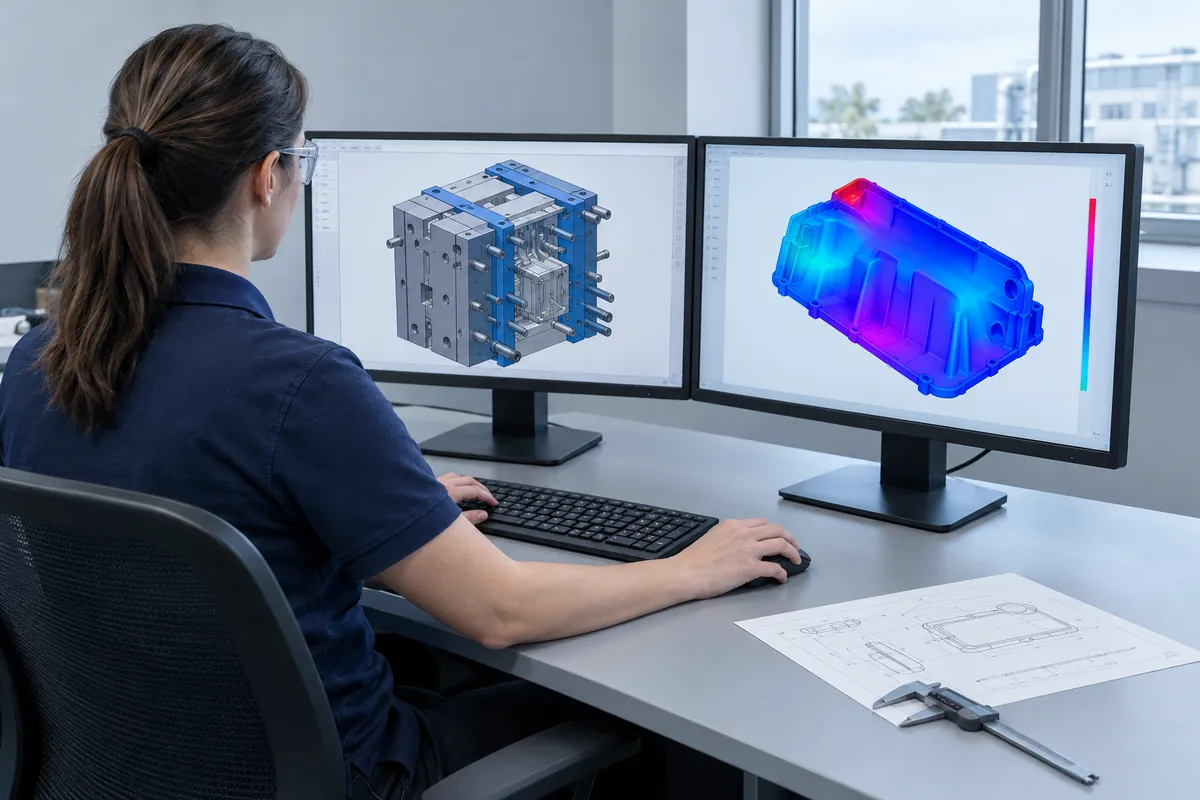
- Wall thickness, rib, boss, and draft review against the chosen resin
- Gate, runner, and weld-line placement; cooling and ejection strategy
- Tolerance analysis and shrink/warp prediction, with mold-flow simulation where fill balance is in question
- Consolidation of multi-piece or metal assemblies into fewer molded parts
- Design of inserts, over-molds, and two-shot interfaces together with the metal components they mate to
Our plastic part design guide publishes the rules of thumb we apply in these reviews.
Material selection
API works directly with multiple resin suppliers and tests candidate materials in-house. We help match the resin to the load case, chemical and thermal environment, regulatory needs (FDA, UL, RoHS, REACH where applicable), appearance, and cost target — including metal- and rubber-replacement conversions using engineering thermoplastics, TPE/TPU, and metal-loaded compounds. Start with the basic resin guide, then let us narrow it.
Prototyping and bridge tooling
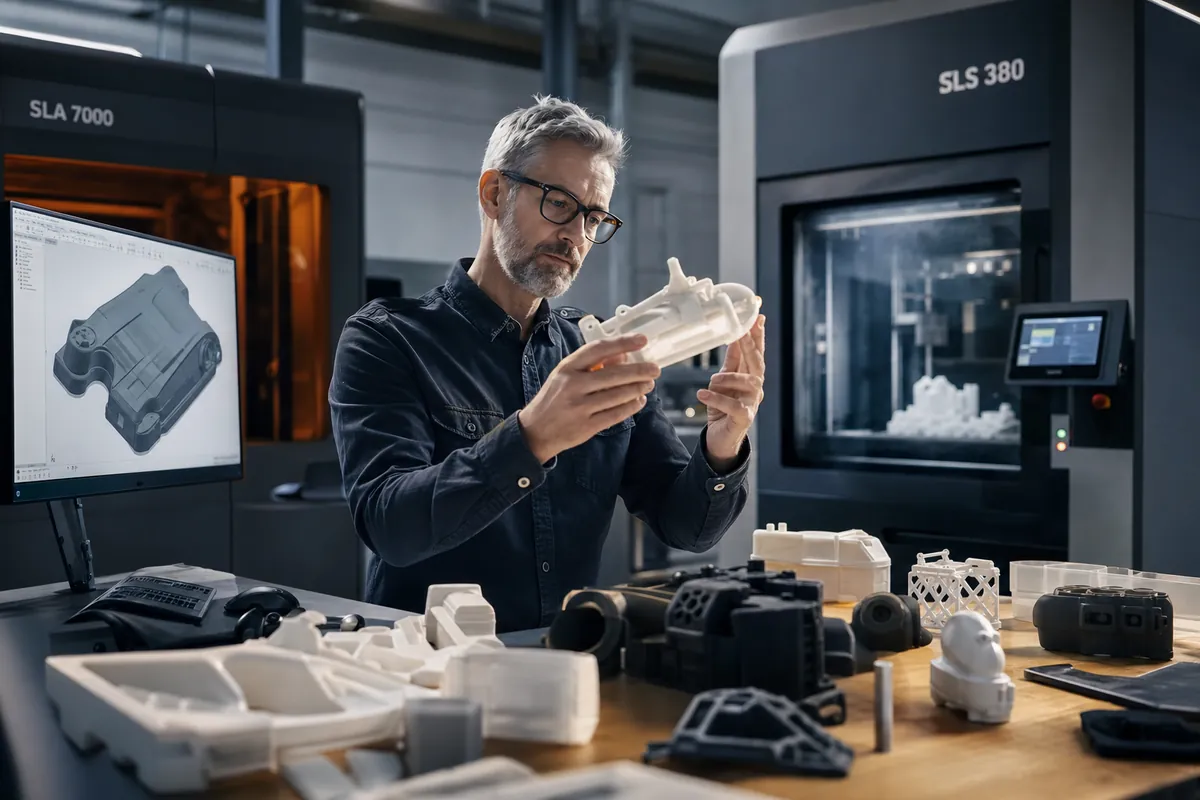
Prototyping at API supports production programs rather than standing alone as a service. An in-house FDM printer with soluble support produces physical parts for fit and function checks before any steel is cut. When the program needs molded prototypes in the production resin, the tool room builds aluminum or pre-hardened bridge tooling that can carry early production while the hardened tool is finished.
Reverse engineering and replication
Have a part but no drawings, or a legacy supplier that has gone quiet? API can measure and model an existing part, recommend design or material improvements, and build a new mold — with the documentation that was missing the first time.
Confidentiality
Drawings, models, and program details are handled under non-disclosure practice. If you prefer a signed NDA before sharing files, say so in your request and we will start there.
Frequently asked questions
Do you design parts from an idea or a sketch?
API focuses on production programs. Our engineers refine parts that already exist as a CAD model, a print, or a sample — design for manufacturability, material selection, and mold design — rather than developing products from a concept. Concept-stage design is taken on selectively, for existing production customers.
Do you offer prototyping before building a mold?
Within a production program, yes. In-house FDM printing provides fit and function parts, and aluminum or pre-hardened bridge tooling produces molded prototypes in the production resin when the program calls for it.
Can you reverse engineer an existing plastic part?
Yes. We measure and model the part, suggest improvements to design or material, and build a new mold with full documentation.
Which CAD formats do you accept?
STEP, IGES, SLDPRT, Parasolid (x_t), and 2D PDF or DWG/DXF prints. If you have only a physical sample, we can start from that.
Related
Bring us the model, the print, or the sample.
Send a model or a sketch — an API engineer will review it and tell you how we would build it.